
KC Land Bank's Housing Plan: 3,500 Vacant Lots
KC Land Bank's Housing Plan: 3,500 Vacant Lots
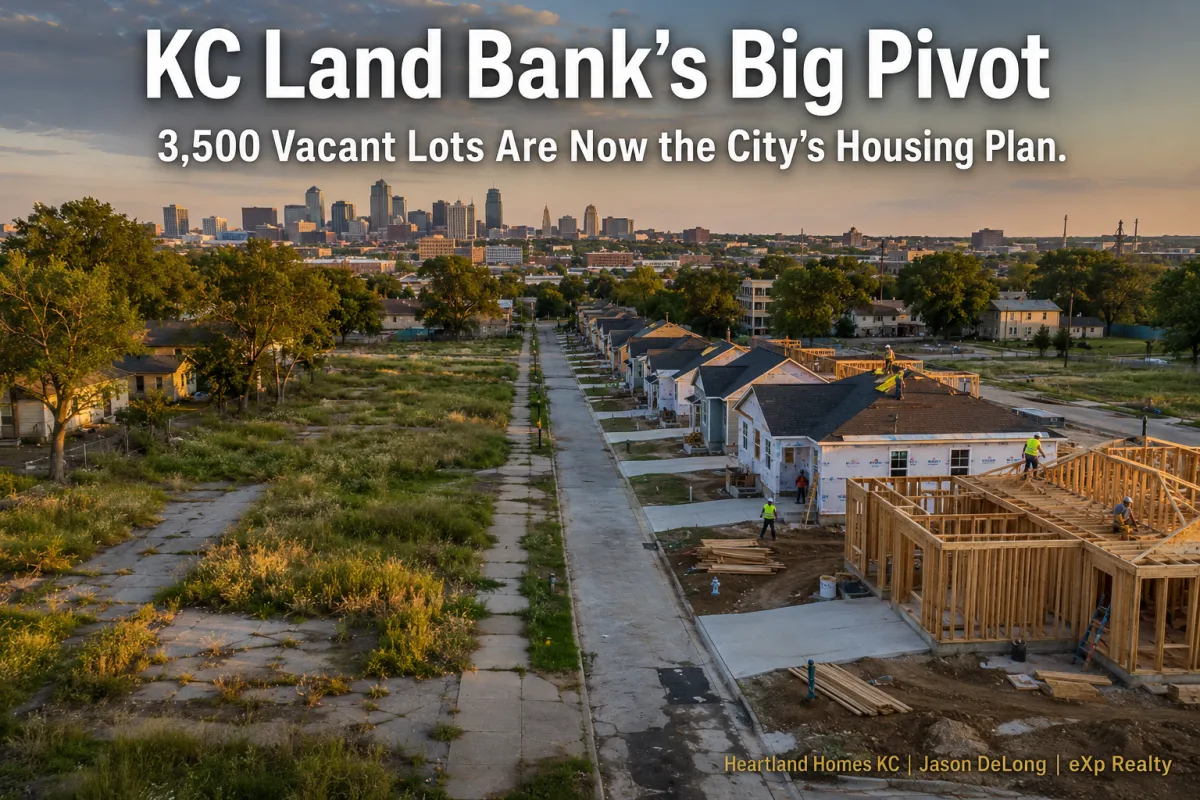
KC Land Bank's Big Pivot: 3,500 Vacant Lots Are Now the City's Housing Plan
The Kansas City Land Bank just changed the game. If you live near a vacant lot, invest in real estate, or you’re just trying to understand where this city is headed, this shift around Kansas City land bank vacant lots is going to affect you more than you think.
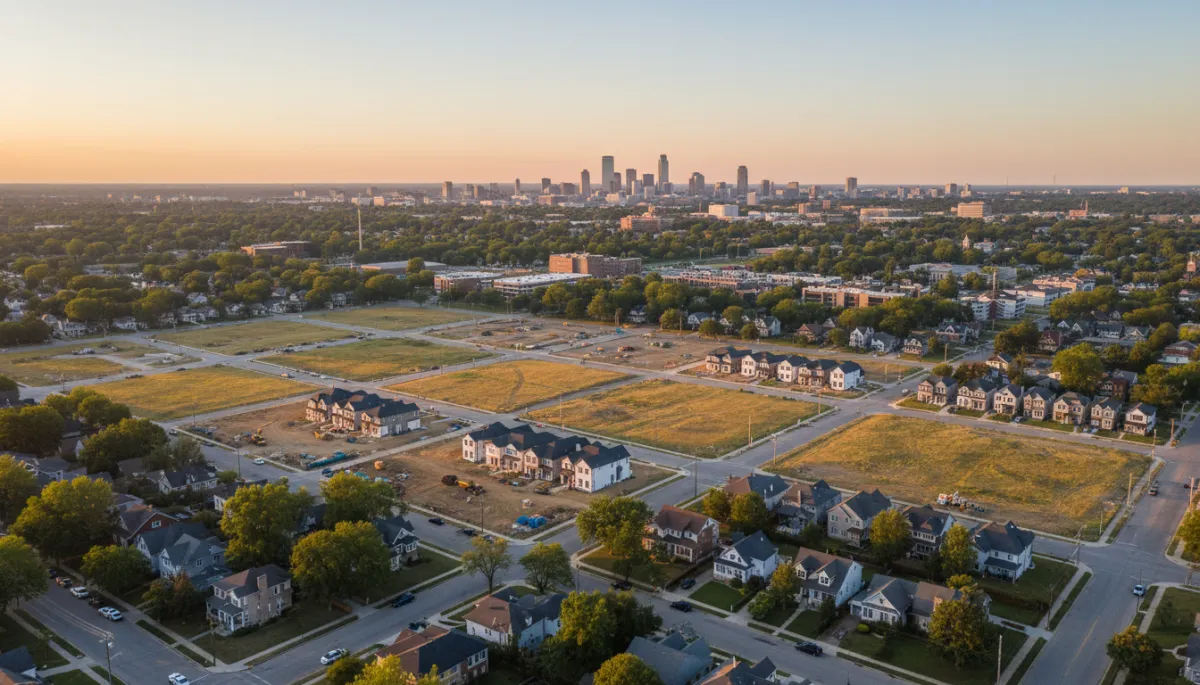
KC’s Vacant Lots Are Becoming Tomorrow’s Housing
What the Land Bank’s New Strategy Means for Neighbors and Investors
I’m Jason DeLong with eXp Realty and Heartland Homes KC. I’ve worked with the Land Bank, I’ve built in these neighborhoods, and I’ve seen how one new house on a vacant lot can change the feel of an entire block. So let’s break down what’s actually happening, in plain English, and what it means for you.
What Changed at the KC Land Bank – and Why It Matters
The Kansas City Land Bank was originally built around one idea: take abandoned houses, sell them cheaply, and get people to fix them up. That worked in some spots, but we eventually hit a wall. Most of the easy rehabs are long gone. What’s left is a handful of rough houses and a sea of empty ground.
As of 2026, the Land Bank only has about 48 houses left in its inventory, but it controls roughly 2,800+ vacant lots in Kansas City, Missouri, and is part of a broader pool of around 3,800 publicly controlled parcels citywide, according to the city’s own strategic planning documents (speakeasy.kcmo.gov). Zoom out even further, and there are an estimated 17,000 vacant lots across the city, with about 20% tied to the Land Bank and related agencies.
That’s the backdrop for the pivot. Executive Director Gunnar Hand has basically said: the rehab era is over; the new mission is vacant land and new construction. Instead of trying to save every old shell, the focus is now on:
-
Assessing Kansas City land bank vacant lots one by one
-
Cleaning up old demolition messes and environmental issues
-
Making lots truly build‑ready for affordable new homes
In other words, the Land Bank is no longer the city’s bargain-basement house flipper. It’s becoming the land prep department for Kansas City’s long‑term housing strategy.
What “Environmental Cleanup” Really Means on These Lots
When people hear “environmental cleanup,” they picture hazmat suits and toxic waste. Sometimes it’s that serious, but most of the time on Kansas City land bank vacant lots, it’s a lot more basic and a lot more fixable than that.
Here’s what’s usually going on under the grass:
-
Old foundations and basements: Decades ago, homes were demolished, and the basements were simply knocked out and covered. That leaves buried concrete, brick, and voids that make it risky and expensive to build without proper removal and backfill.
-
Buried debris: Think broken glass, old plumbing, random metal, sometimes even chunks of asphalt or burned material. This can damage equipment and create unstable soil for new foundations.
-
Contamination testing: Before a bank or builder wants to put serious money into a project, they want to know what’s in the dirt, especially on older sites that might have had fuel tanks, lead paint, or industrial uses nearby. That’s where Phase I and sometimes Phase II environmental reports come in.
The Land Bank’s new strategy is to handle more of this up front. Instead of saying, “Here’s a cheap lot, good luck,” the goal is to deliver lots that are actually buildable, cleaned, documented, and less risky for both small builders and bigger developers. That’s a huge shift, and it directly impacts the math on whether new construction pencils out in our core neighborhoods.
Washington Wheatley: The First Housing Accelerator Test Case
The first big pilot for this new approach is the Washington Wheatley Housing Accelerator. If you’re not sure where that is, it’s roughly 18th to 27th Street, Prospect to I‑70, about 95 acres with at least 45 Land Bank lots in play right now.
“Housing Accelerator” sounds like a buzzword, but here’s what it really means on the ground:
-
The city and Land Bank are bundling lots instead of scattering one‑offs, so builders can plan multiple homes at once and spread their costs.
-
They’re targeting infrastructure and cleanup, removing buried foundations, grading, and making sure utilities can realistically serve new homes.
-
They’re aligning this with broader affordable housing goals, so we’re not just building one-off high-end homes that don’t fit the neighborhood.
If you live in or near Washington Wheatley, expect to see more survey crews, soil testing, and eventually, sticks going in the air. This is the city testing how fast it can turn Kansas City land bank vacant lots into real, lived‑in homes at scale, not just a house here and there.
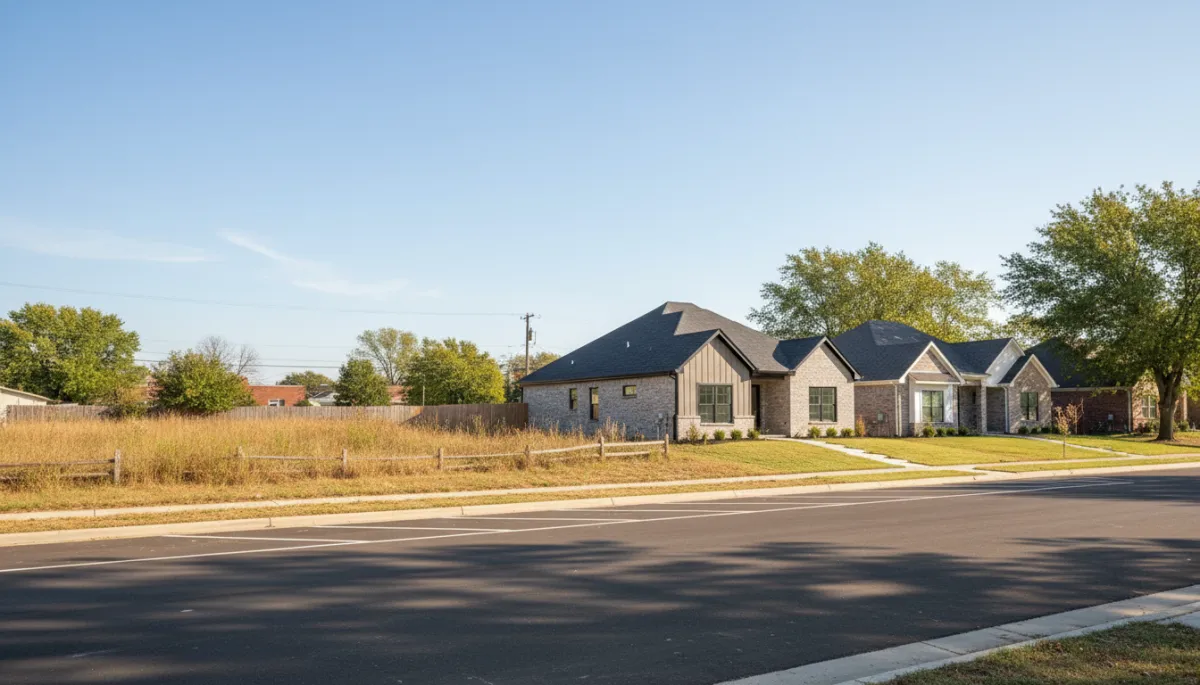
One new home on a vacant lot can reset expectations for an entire block.
Meanwhile, in KCK: Wyandotte County Is Already Building
While Kansas City, Missouri, is gearing up its strategy, Wyandotte County on the KCK side has already pushed ahead with its own version of activating vacant land. Northeast KCK has more than 4,000 vacant lots, and the county is leaning hard into modular homes as a way to fill them quickly and affordably.
They’ve already celebrated a ribbon-cutting, targeted around March 2026, for early phases of modular housing on these lots. The idea is simple: factory‑built homes are brought in and set on permanent foundations, cutting down build time and controlling costs. It’s part of a broader Wyandotte County housing strategy focused on turning long‑ignored land into starter homes and workforce housing.
The important takeaway for both sides of the state line: vacant land is now central to housing policy. Kansas City land bank vacant lots and Wyandotte County’s empty parcels are no longer just dead space on a map; they’re the raw material for the next decade of housing.
If You Live Near Vacant Lots: What This Means for Your Property Value
Let’s talk about the question most homeowners actually care about: Is my house going to be worth more or less if these lots get built out?
In my experience, when Kansas City land bank vacant lots turn into well‑built homes, you usually see:
-
Higher comps: New construction raises the ceiling on what appraisers think your block is worth. Even if your home is older, it benefits from those higher numbers.
-
Better perception: Fewer overgrown, trash‑catching lots means buyers feel safer and more confident in the neighborhood’s direction. That shows up in offers.
-
Clearer trajectory: When you see multiple homes going up, you’re not guessing anymore—you know the area is on an upswing, and that makes timing your sale easier.
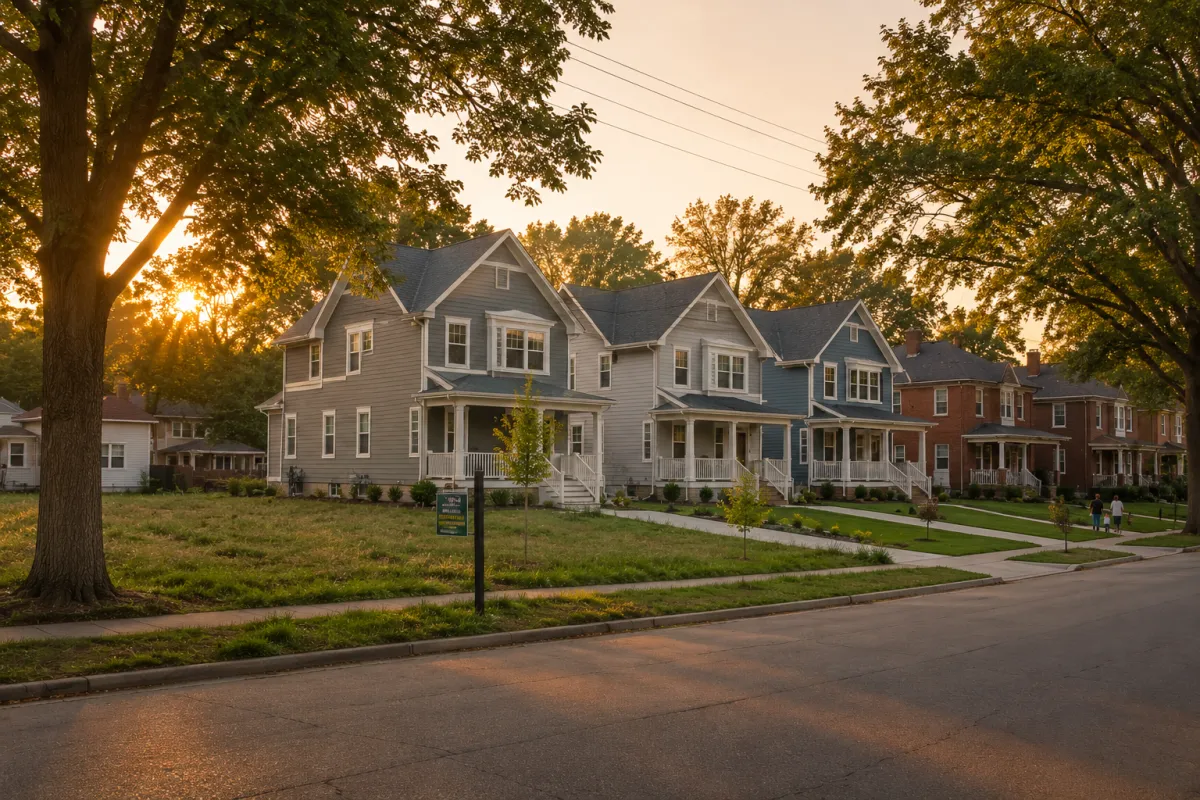
The downside? Construction brings noise, trucks, and some short‑term hassle. But from a value standpoint, I’d rather own next to a new $250,000–$300,000 home than an empty lot that nobody has a plan for. Over time, that’s how equity quietly builds for existing owners.
💡 Quick tip for homeowners: If you’re near multiple Kansas City land bank vacant lots and you’re curious what future development could do to your price, start by getting a baseline. You can check your current value at /home-value and then watch how it shifts as new builds come online.
If You’re an Investor or Builder: How to Play This New Game
For investors, small builders, and even serious DIYers, this pivot around Kansas City land bank vacant lots opens a different kind of opportunity than the old “buy a $5,000 shell and gut it” model.
How to Actually Acquire Land Bank Parcels
The Land Bank process changes from time to time, but the basics are consistent:
-
You identify a parcel (or group of parcels) from the Land Bank’s online inventory.
-
You submit an application with a clear plan, what you’ll build, a timeline, and how you’ll pay for it.
-
A board reviews and approves (or denies) based on feasibility, neighborhood fit, and your track record.
As the city leans into the Housing Accelerator model, expect more bundled offerings and possibly more streamlined paths for qualified builders, especially in focus areas like Washington Wheatley.
What “Buildable” Really Means
A lot can look great on a map and still be a nightmare to build on. When I say a lot is buildable, I’m looking for:
-
Reasonable access to water, sewer, and power without insane tap or extension fees
-
Soil and environmental conditions that don’t blow up the budget (no major contamination, no extreme retaining needs)
-
Zoning that actually matches what you’re trying to do, single‑family, duplex, small multifamily, etc.
The Land Bank’s new emphasis on cleanup and assessment means more of these boxes will be checked before you ever write a check. That reduces surprises and makes your pro forma more reliable.
Rehab vs. New Construction: The Real Math
Investors always ask me, “Isn’t new construction more expensive than rehab?” The honest answer: sometimes. But on the kinds of properties the Land Bank used to hold, burned out, stripped, or structurally compromised, rehab can actually be the more expensive, riskier route once you factor in surprises behind the walls and under the floors.
On a clean, buildable lot, new construction gives you:
-
Predictable costs (you’re not chasing hidden damage)
-
Better energy efficiency and lower operating costs for the end buyer or tenant
-
Higher appraised values in many cases, especially when multiple new homes cluster together
That’s why this pivot toward Kansas City land bank vacant lots and new builds isn’t just a policy tweak; it’s a signal that the city wants to stack the deck in favor of building from the ground up in targeted neighborhoods.
Where This Is All Headed – and How I Can Help
Over the next decade, you’re going to see more and more Kansas City land bank vacant lots turn into real addresses with real families living in them. Some will be stick‑built, some modular, some affordable, some market rate. But the era of letting thousands of lots just sit is ending. That’s good for neighbors, good for investors, and good for the city’s tax base.
I’ve built over 100 homes and flipped over 150 homes personally, so I know a thing or two about the process. If you’re trying to figure out where you fit into this, whether you own a home near vacant lots, you’re thinking about selling, or you want to invest in the next wave of infill housing, having someone who actually understands both the Land Bank and the build process matters.
If you’re a homeowner and want to see what your house is worth in today’s market, you can start with a quick estimate at /home-value. If you’re in a situation where you’d rather just be done and move on, you can request a straightforward cash offer at /cash-offer.
Investors and builders who want to talk strategy, whether that’s picking the right Kansas City land bank vacant lots, running the numbers on new construction vs. rehab, or lining up your next project, can grab a time with me at /schedule-call. And if you just want to see what’s already out there on the market today, take a look at current opportunities at /featured-listings.
However, you’re connected to these blocks, owner, renter, investor, or future buyer, the story of Kansas City’s vacant lots is about to get a lot more interesting. Now is the time to pay attention, and, if it makes sense for you, get in the game.
Categories
Recent Posts


GET MORE INFORMATION
REALTOR® Lic# 2007006120 | 2000164348